1. Forthcoming amendments to the EPBD Building Regulations

    February 16, 2012

    Reminder from NHER
    In September last year, we received notification from DCLG of their intention to defer the proposed changes to the EPBD Regulations until 6 April 2012. DCLG also advised that they would provide further information and interim guidance in due course and we will let you know any further news as and when we are advised.

     DCLG has confirmed that although RDSAP 9.91 will go live as of 1 April 2012, the amendment to the Regulations will not come into force until 6 April 2012.  The reason for this discrepancy is that in order to minimise disruption, Landmark always schedule updates for a Sunday evening.  However, Regulations must generally come into force on a single Common Commencement Date – either 6 April or 1 October.  As a result, the RDSAP date and the date the Regulations come into force are slightly out of sync.

     The summary of the changes to the EPBD Regulations are as follows:

     The changes will extend the current requirements to commission an EPC that apply to residential buildings to all residential and non residential buildings when sold or rented out

     The requirements for the provision of an EPC with written particulars will be extended to all buildings sold or rented out and the option to attach the asset rating will be removed. The requirement will only extend to the first page of the EPC (the new EPC will consist of two pages, with four pages of recommendations)

     The requirement for the statutory lodgement of air conditioning inspection reports onto the central EPC Register


  2. Full Government Documents for New EPC Regulations

    February 16, 2012

     For those who are interested here are the Statutory Instrument and Explanatory Memorandum from the DCLG regarding the new EPC Regulations effective from 6th April 2012 : 
    EPC Regs April 2012 Statutory Instrument
    EPC Regs April 2012 Memo


  3. Doubts about the likely success of Green Deal

    January 13, 2012

    Carbon Commentary have doubts about Green Deal success : Green Deal Failure


  4. Green Deal or No Deal?

    January 13, 2012

    Report in Building.co.uk predicts collapse in cavity and wall insulation after lauch of Green Deal due to withdrawl of other funding. Click on this link to read more:

    Collapse in cavity and loft insulation


  5. Could this solar power breakthrough kill off nuclear power?

    December 23, 2011

    Tata Steel and Dyesol team with the world’s largest dye sensitised PV module.
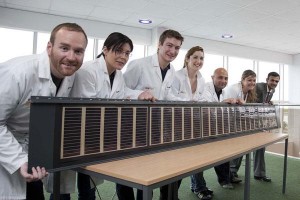
     

    New breakthroughs in solar technology have been announced which could mean a complete game changer in the way electricity is generated.

    The technology involves printing a new type of solar photovoltaic (PV) cell onto building materials, such as steel and glass, and allowing them to generate electricity.

    The chief announcement is the result of joint ventures between Australian company Dyesol and, in Wales, Tata Steel, and in America Pilkington Glass.

    Researchers are being cautious as to the timescale, but it is estimated that in about five years time industrial production on a large scale could begin.

    Speaking at a recent conference on solar power, James Durrant of the Department of Chemistry and Energy Futures Lab at Imperial College London, said: “If just 10% of Tata’s annual steel output were coated with DSSC, this would represent the output capacity equivalent to a 1GW nuclear power station per year”.

    Dye-sensitised solar cells (DSSC)

    These ‘dye-sensitised solar cells’ (DSSC) employ a photoelectrochemical system similar to that employed by plants to capture solar energy.

    In the manufacturing process, a nanocrystalline titanium oxide film plus a sensitiser dye are printed onto glass, polymer or steel and covered with glass or plastic.

    Modules made from the cells currently have efficiencies up to 8% depending upon a compromise between stability and cost, but cells in the lab have reached 13% efficiency, and Dyesol is confident they can reach 10% under mass-production conditions in five years time.

    DSSC has the following advantages over conventional silicon photovoltaic modules:

    • it can output a constant operating voltage in all light conditions, including low light and dappled conditions typical of urban and city environments, making it an ideal renewable resource for closely packed buildings
    • it has an optimum working temperature of 40o-50oC, unlike silicon PV, which becomes less efficient at higher temperatures
    • it uses little energy in manufacture due to the low temperature processes and absence of high vacuum technology needed for second generation technologies (thin film PV)
    • due to the nanoparticulate nature of the titanium dioxide, modules can generate electricity from light from any direction, removing the need for them to be pointed directly at the sun
    • it can be produced in a range of natural colours and light transmission effects including transparent, translucent or opaque
    • it uses no polluting dopant
    • the ability to produce a constant operating voltage in all light conditions
    • it is ideal for integrating into building cladding.

    The race to mass production

    Many companies are racing to produce this type of cell at an industrial scale.

    Notable organic and dye-sensitized solar cell (DSSC) developers include, beside Dyesol: Eight19, EPFL, G24i, Heliotek, Konarka (printing large molecule polymers), Mitsubishi, Peccell, Plextronics, Solarmer, SolarPress and SolarPrint.

    SolarPrint is also developing nanomaterials and processes to print the cells onto polymer substrates. Other researchers are experimenting with printing on fibreglass.

    Eight19 Limited has raised $5 million from the Carbon Trust and Rhodia to develop plastic organic solar cells. The name “Eight19” refers to the time it takes sunlight to reach the earth.

    The reason why Dyesol is a front-runner is because of its teamwork with Pilkington and Tata Steel. These joint ventures are already ahead of the game in terms of applying coatings on a continuous roll, as opposed to a batch process, output.

    Existing coatings applied to steel include galvanising layers to prevent rust, colours, anti-static, and self cleaning layers, all of which are guaranteed for 40 years.

    Tata’s Rodney Rice, speaking from their DSSC Demonstration Roof at the PV Accelerator in Shotton, North Wales, where the process is being tested, told Energy and Environmental Management: “We use high speed large scale coating, on steel rolls 1.5m wide, put through at a speed of 200 metres per minute.

    “This adds up to 200 million square metres of steel per annum, of which half ends up on buildings. If we assume 10 to 20% of this is on a roof or wall and the PV is operating at between 8 and 10% efficiency, then this will easily equate to 1 GW per year.

    “We are developing our knowledge of printing coatings to printing the ability to generate electricity and to steel. It uses reasonably straightforward materials which are reliable, simple to apply and easy to scale up as there is no vacuum and fewer people involved.

    “This means it has the perfect attributes for the mass-market and the technology will work well in northern Europe where there are large surface areas of roof tops.”

    The Dyesol-Tata partnership has obtained considerable support from the Welsh Government, and over the last four years has spent £11 million on R&D.

    “Lowering the price is the objective and we are now developing processes that will allow us to do this in manufacture,” continued Rodney.

    “Initially steel rolls will be one metre wide with 10% efficiency leading to a production of 400 MW per year,” he said.

    Tata use coated steel and coated polymer electrodes, whereas Pilkington are using coated glass electrodes.

    In America, the Pilkington-Tata joint venture has won $1 million from the Ohio Third Frontier Fund and intends to complete its proof of concept project for large glass substrate panels by the summer of 2012.

    Its chief competitor’s technology, American company Konarka, is a photo-reactive polymer material invented by Konarka co-founder and Nobel Prize winner, Dr. Alan Heeger.

    This can be printed or coated inexpensively onto flexible substrates, again using roll-to-roll manufacturing.

    It can work indoors too, capturing ambient light.

    Like Dyesol, Konarka has recently entered a partnership agreement with a steel producer, ThyssenKrupp Steel Europe to develop solar steel roof, facades and other construction elements for building-integrated photovoltaics (BIPV) in Germany.

    Dr. Lars Pfeiffer, head of quality and development at the Color/Construction unit, said: “Unlike conventional silicon-based photovoltaic systems, the joint solar solution will not need to be mounted on a raised structure but will integrate smoothly into the building envelope. We look forward to providing the valuable, added benefits of solar to our customers at a low cost.”

    Challenges

    Some problems remain to be solved. For example, could it survive 25 years?

    Rodney Rice says at the moment Tata can produce several square metres, and has installed a 15 m² demonstration roof can be used to test the output and performance.

    “We are now developing our abilities in the process, durability, assembly and manufacturing,” he said.

    It is the dye which is crucial for the generation of the electricity from light. Different dyes are being researched all over the world.

    “We are looking for the perfect dye,” said Rice. “The ability to capture light energy from a wide range of wavelengths is required in order to maximise efficiency. More than half research in world is looking at new dyes, extending wavelengths, including into the infrared,” he said.

    Dyesol is now ramping up more aggressive performance targets under a revised Technology Road Map, to achieve grid parity at an earlier date.

    Whichever company is the first to successfully produce cladding for buildings which can cheaply produce electricity, will find themselves at the head of a multibillion dollar market.

    Even supposing half of what these companies are claiming is hyperbole, then we are perhaps looking at a ten year timescale rather than five years before the technology reaches mass production.

    Even so, this would be before the anticipated timescale for new nuclear power stations to come online. So, the big question is: would it obviate the need for new nuclear power by rendering it uncompetitive?

    Thinking about the ease and convenience of producing, installing and using this technology at the point of use, it is clearly going to be a massive game changer.

    The missing part of the jigsaw is still electricity storage, since, although this technology can produce energy at night time from indoor lighting, this will not meet peak demands.

    This topic will be the subject of another special Energy and Environmental Management technology report in 2012.


  6. Wind turbine blows up in wind!

    December 9, 2011


  7. IMPROVED AND REDESIGNED ENERGY PERFORMANCE CERTIFICATE

    December 2, 2011

    DCLG have announced a new look and redesigned EPC that will make it easier to read and focus on the recommendations and Green Deal options. Click on the link below for the DCLG press release:

    DCLG EPC changes 29 Nov 11


  8. Holiday Lets – What Type of Agreement Are They?

    November 22, 2011

    The attached useful document discusses the different types of letting agreements that are used in practice ( with thanks to www.landlordZONE.co.uk). Click on the document name below:

    Types of Letting Agreements and Tenancies


  9. New DCLG Guidance Nov 2011:EPC for Holiday Cottages

    November 22, 2011

    DCLG have issued new guidance on the rules requiring EPCs on properties let out as holiday cottages.

    Click this link for the DCLG FAQ : EPC for HOLIDAY LETS Nov 2011


  10. NHER News – rdSAP Update for Green Deal

    October 26, 2011

    RDSAP will be changed on 1 April 2012 throughout the UK to RDSAP 2009 v9.91. This week all EPC accreditation schemes received draft details of the planned changes; and they are so substantial that they look likely to require all DEAs to pass a ‘top up’ exam. The changes are part of a DECC/DCLG drive to gear the industry up for the Green Deal, with the EPC being the lynchpin that tells householders what measures are relevant to their home, what the likely costs are and if the measures are likely to be eligible for Green Deal funding. Regardless of the success or otherwise of the Green Deal, the changes will make RDSAP a much more useful tool containing options currently only available as part of a full SAP assessment. The changes will also make it possible to use RDSAP to reassess a dwelling previously assessed with full SAP when the dwelling was first built.

    So what was the thinking behind the changes to RDSAP?

    First and foremost was the need to eliminate those aspects of RDSAP that have been widely criticised and to make it a tool suitable for use in any serious attempt at improving the energy efficiency of existing homes. The view was that DEAs are now sufficiently confident, proficient and experienced to handle the increased complexity that this will require.

    The starting point for improving RDSAP was that all energy efficiency / renewables measures installed into a home under the Green Deal have to be able to be entered into RDSAP software when the dwelling is reassessed for an EPC. This requirement led to over 20 areas of change to the RDSAP data entry process; for example, if the gable wall of a house has been externally clad to a U-value of 0.20 W/m2K, then RDSAP has to allow the entry of a U-value of 0.20 W/m2K for that specific wall area. This requirement led to changes being made to enable the DEA to define an alternative wall for each building part (Main, extension 1, extension 2 etc) and to be able to enter a specific wall U-value; this was then extended to allow entry of an age band or a thickness/material. Similarly, if a dwelling has a boiler fitted with a Flue Gas Heat Recovery System then the DEA needs to be able to enter such a system into the software. Although the changes to RDSAP are major, they have been designed to keep the process of assessing most homes as similar as possible to the present approach.  Much of the additional data entry will only be required when documentary evidence is available that provides supplementary information to be entered into RDSAP. And so DEAs will NOT need to calculate U-values or, in most cases, carry out additional measurements.

    The second driver for change was the need for RDSAP to be able to assess and where appropriate recommend every measure that is eligible for full or part funding under the Green Deal. Therefore, added to the current list of RDSAP Recommendations will be Flat roof insulation, Room In the Roof Insulation, Floor Insulation, Insulated Doors, Waste Water Heat Recovery and Flue Gas Heat Recovery. There will be also be a section on the EPC for ‘Alternative’ Recommendations in addition to the main RDSAP recommendations: Heat pumps, micro CHP, Biomass boilers and External Insulation with cavity insulation. The look of the EPC will also be very different, containing more detailed information and less descriptive text.

    The final key driver for change was the need for the estimates of financial savings to be more accurate, because of the Green Deal’s ‘promise’ that the savings under standard occupancy conditions will be more than the cost of servicing the loan taken out for the installation of improvement measures. For example, RDSAP savings will now be based upon regional weather patterns.

    But what will  all this mean for DEAs in practice?

    The first obvious impact will be the need to prepare for and sit the top up exam.

    On the job, there will be some additional data entry to software and extra data collection. In cases there will be the need for more expert judgment; this will require clear new conventions to be agreed by all accreditation schemes. The main additions to the survey process are:

    • Entering wall thicknesses and entering separately any walls that are dry-lined
    • Establishing if there is the possibility that wall cavities are < 50mm or if the dwelling is located in a high exposure area (as these need specialist installation techniques), or if there are obvious obstructions on site that might make cavity fill or cladding more difficult
    • Entering additional data provided in documentary evidence, e.g.details of solar thermal, PV, part  walls that have been insulated
    • Checking that element areas of roof rooms are not obviously wrong; and if they are then entering better estimates
    • Assessing the approximate % of openings that are draught proofed and counting the number of doors
    • If using extended glazing, then entering the orientation of each opening
    • Recognising the presence of additional measures, e.g. flue gas heat recovery systems, waste water heat recovery systems

    These changes place the EPC and with it the DEAs at the heart of government policy regarding tackling climate change and, in the long term, this has to be good for the industry. In the short term, it will require that DEAs put some time into increasing their skills and getting used to the changes. Hopefully, the way in which RDSAP 9.91 is structured and implemented will minimize the extra time needed on site. However, inevitably, there will be situations where more time is required to carry out the survey, especially when encountering new technologies and refining new processes.